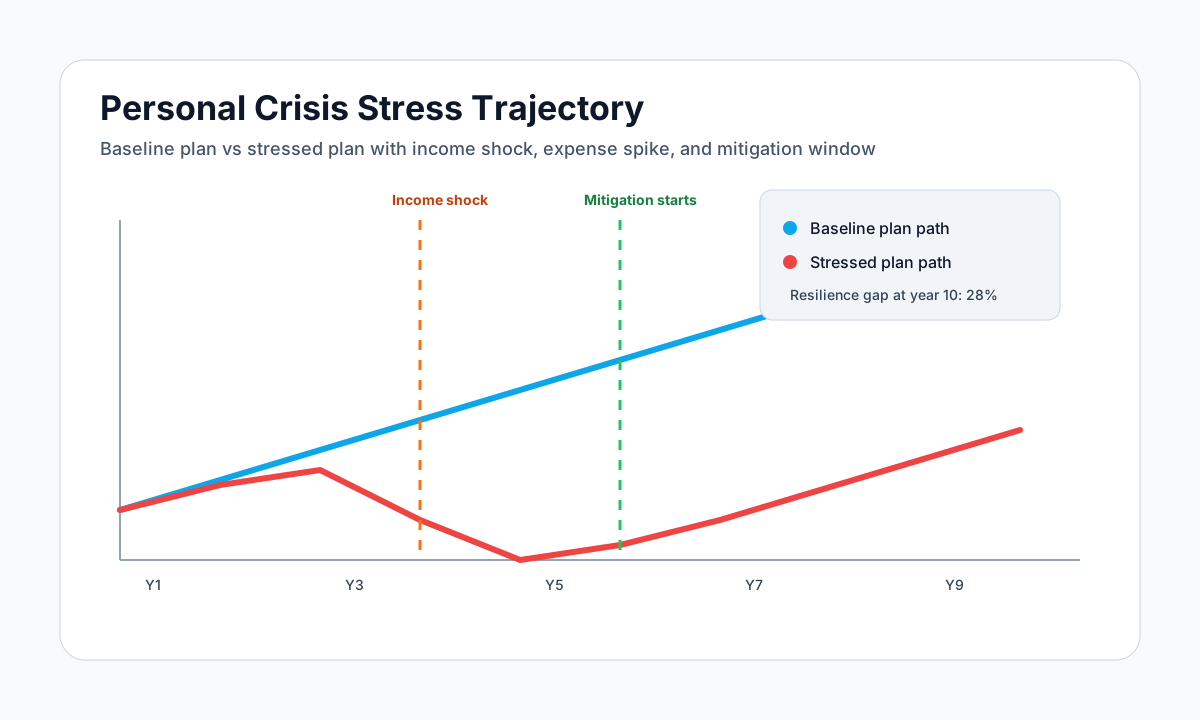
Decumulation Support
Structured guidance and evidence-ready outputs.
Vulnerable clients in decumulation: where support failures become conduct failures
Decumulation stress changes the meaning of support. Where income anxiety, ill health or bereavement are present, weak communication can become a suitability and conduct problem quickly.
By Plannetic Research
Highlights
Income anxiety
Immediate
In decumulation, market falls are interpreted against spending security, not just fund value.
Support timing
Critical
Delayed contact gives clients time to self-interpret risk and make irreversible decisions.
Decision framing
Scenario-led
Vulnerable clients need structured options, not generic reassurance during stress.
Why decumulation changes the support equation
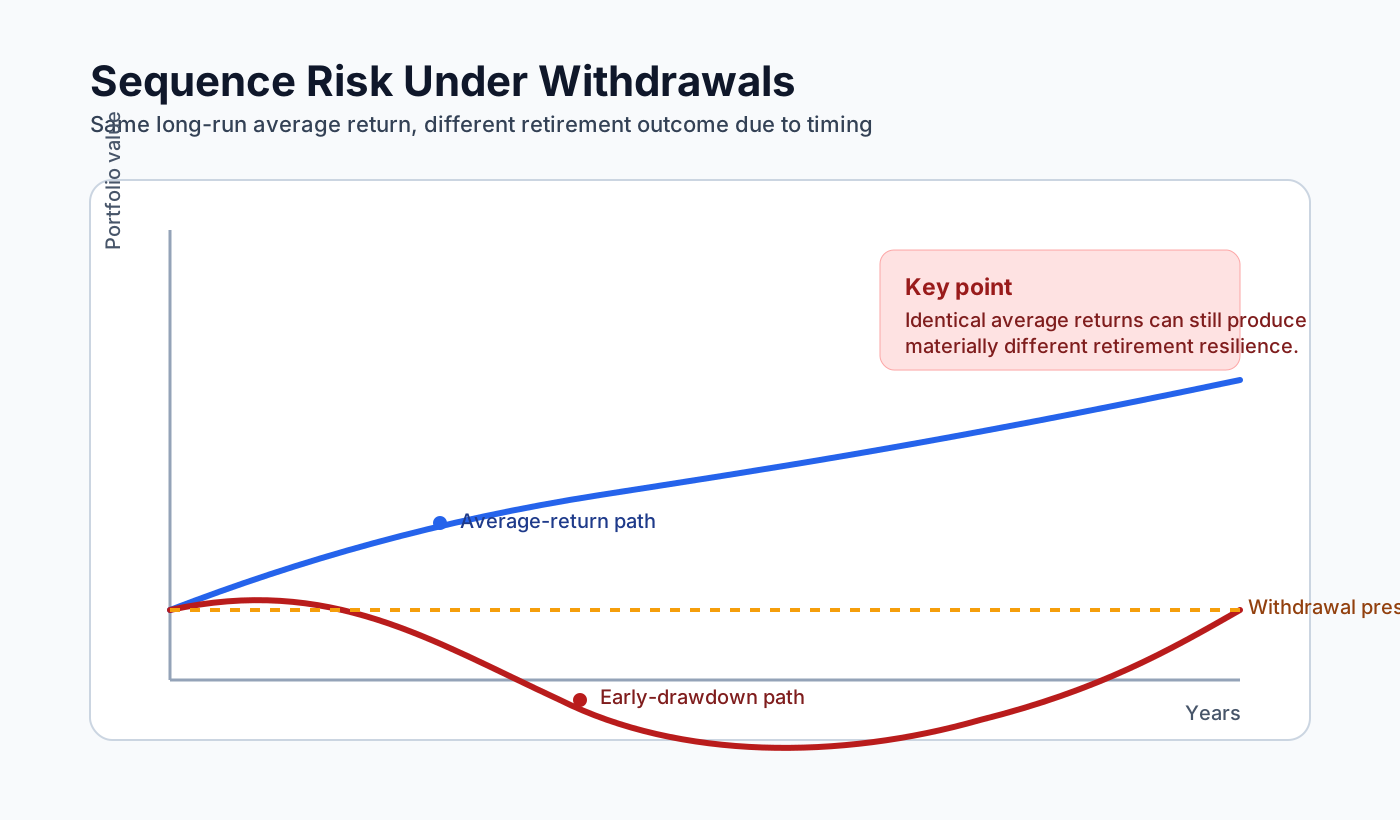
A market fall means different things in accumulation and decumulation. An accumulation client can often view lower valuations through the lens of future contributions and long-term recovery. A decumulation client is more likely to translate the same event into a question about income security, spending reduction and the possibility of running out of money.
That difference matters enormously when vulnerability or adverse life events are present. Bereavement, declining health, cognitive strain, family dependency, caring responsibilities or sudden expenditure needs all increase the chance that a client will interpret short-term stress as permanent failure. In that environment, weak support is not just poor service. It can become a conduct failure because it alters how the client responds to risk.
This is why vulnerability in retirement books cannot be handled solely through generic fair-treatment wording. It requires advisers to understand the interaction between the client's personal circumstances and the structure of the decumulation plan itself.
Where firms get the support response wrong
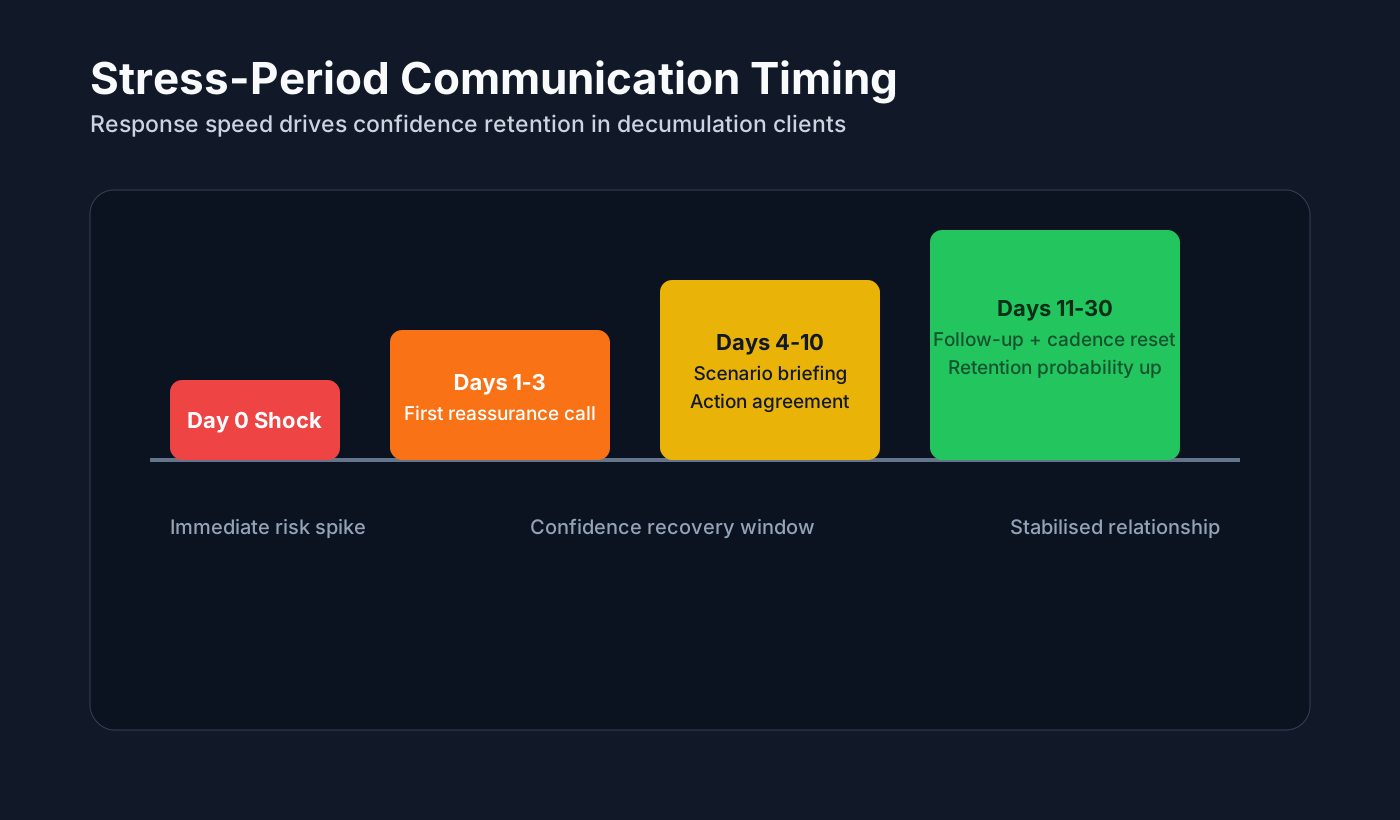
The most common failure is to treat the client as needing reassurance when they actually need structured re-framing. A vulnerable client under decumulation stress does not benefit from broad statements that markets recover over time if the immediate question in their mind is whether they can still draw the income they planned. Reassurance without scenario context can worsen confusion because it sounds detached from the pressure the client is experiencing.
The second failure is delay. Support that arrives after the client has already de-risked to cash, submitted transfer paperwork or stopped trusting the original recommendation is much harder to recover. The third failure is weak evidence. Notes that say the client was contacted do not show what was explained, what options were discussed, or whether the client understood the trade-offs.
These failures are operational, not purely interpersonal. They reflect the absence of a support model that links vulnerability, decumulation risk and communication timing.
What good support looks like in retirement advice
A stronger approach combines vulnerability awareness with scenario-led explanation. The adviser should be able to explain what changed, what remains true, what options are available now, and what new trigger would justify a different course of action. This structure is especially important where the client is anxious, grieving or otherwise cognitively burdened, because it reduces the volume of decision-making they have to do alone.
Good support also creates an explicit record of the adaptation made. That might include slower communication cadence, involvement of a family member or attorney, simplified explanation, shorter decision windows, or more frequent monitoring. The key is that the adaptation must be linked to the client state and the planning context rather than written as generic vulnerability boilerplate.
This is how support becomes defensible. It is tailored, time-bound, evidence-backed and visibly connected to the decumulation decision the client is trying to navigate.
How Plannetic should position decumulation support
Plannetic should treat decumulation support as a convergence point between planning logic and service governance. The platform can help firms identify stress events, anchor communication around scenario evidence, capture the adaptations made for vulnerable clients, and keep the resulting record available for review and oversight.
That gives firms a materially stronger answer to both the regulator and the client. Instead of saying that the adviser acted with care, they can show how the support intervention was triggered, what planning evidence was shared, which options were discussed and what follow-up commitment was agreed. For retirement advice, that is what credible support looks like.