Stress Testing
Structured guidance and evidence-ready outputs.
Stress-testing client plans with market and personal shocks: the Plannetic approach
How Plannetic applies stress parameters to baseline plans, with a practical case study showing how scenario outputs convert into mitigation actions.
By Plannetic Risk Lab
Highlights
Scenario breadth
Multi-domain
Market, inflation, rates, longevity, currency, personal events.
Resilience outputs
5 signals
Survival, shortfall, worst case, resilience score, mitigation priority.
Action framing
Priority tiers
Immediate, short-term, and long-term mitigation guidance.
From baseline planning to adverse-condition realism
Advisers rarely fail because they model the central case. They fail when plans were never tested against adverse conditions clients cannot absorb.
Plannetic starts from baseline suitability assumptions, then applies structured shocks before simulation. This keeps stress outcomes tied to the same client profile.
How shock parameters are applied
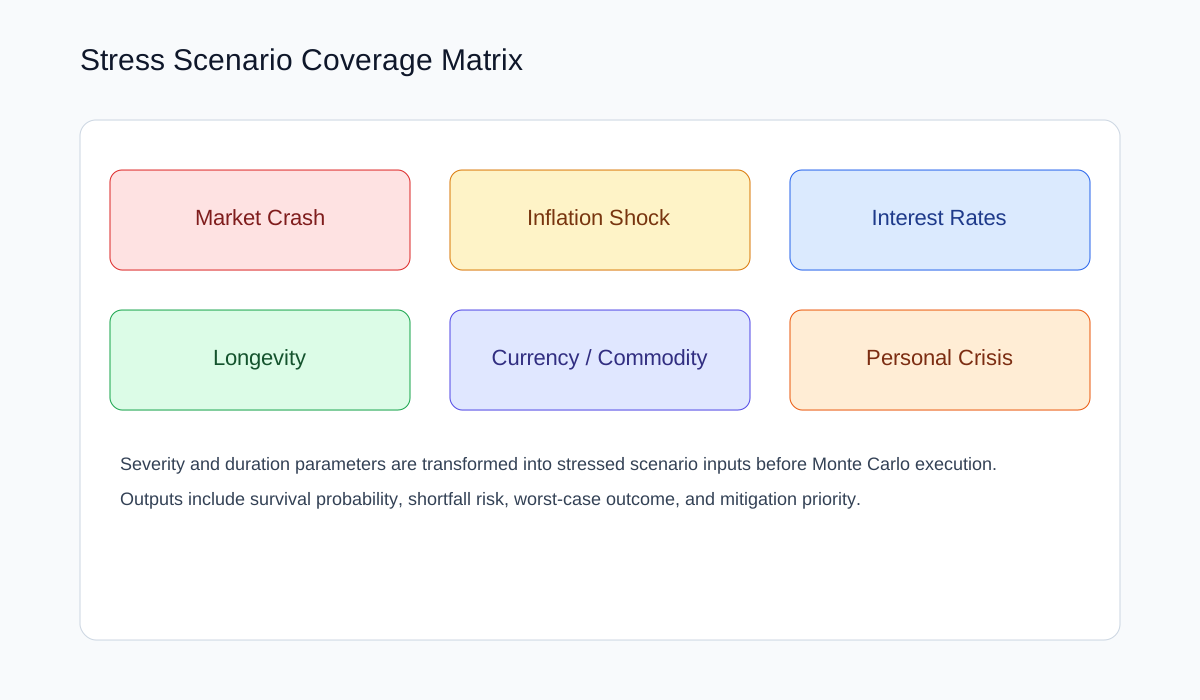
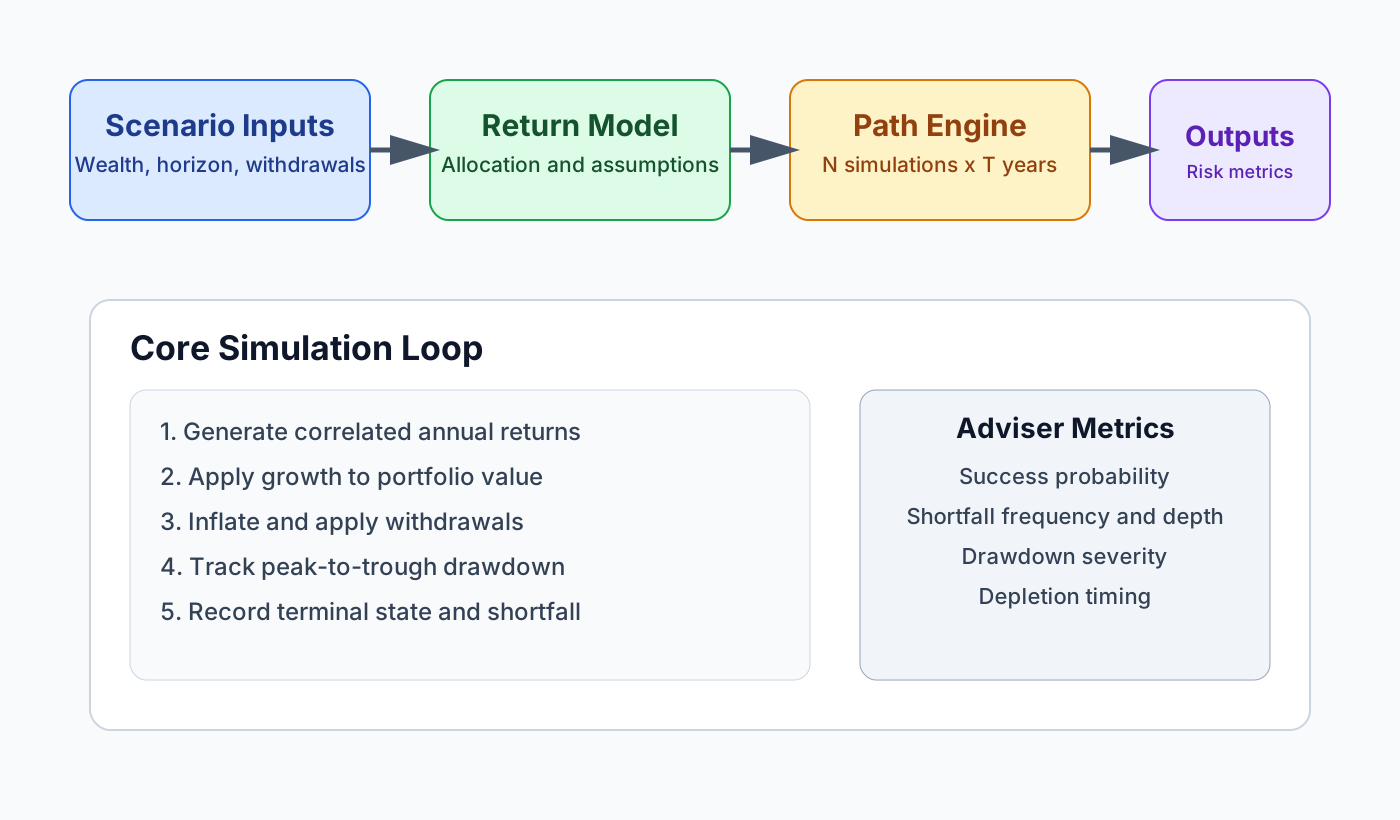
Each stress template has explicit parameters. Inflation shocks raise inflation and expense pressure while reducing real return assumptions. Market shocks apply portfolio impact based on allocation.
Interest-rate scenarios adjust cash and bond assumptions. Longevity scenarios extend horizon and cost burden. Personal crisis scenarios change income, expenses, and assets.
The key control is deterministic transformation: same baseline plus same scenario yields the same stressed input set.
Why personal crisis modelling is non-negotiable
Most public stress frameworks focus only on market events. That underestimates real advisory risk. Client outcomes are frequently derailed by job loss, health events, separation, or forced early retirement rather than a textbook macro shock.
Plannetic includes personal crisis stress templates so advisers can test whether a plan remains viable when income and expenses shift abruptly. This supports both suitability reasoning and vulnerability-aware planning.
Personal-risk modelling is not alarmism. It is basic client-protection engineering.
Case Study: Personal Shock Breaks a Resilient Base Case
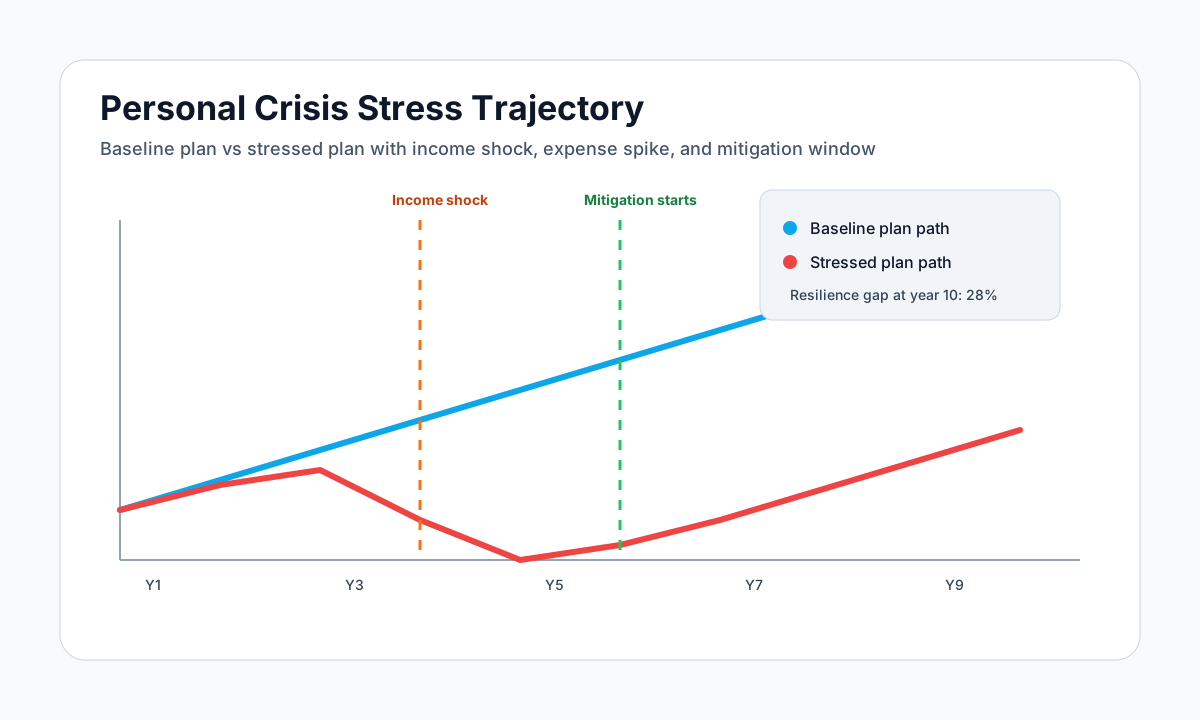
An anonymised household plan looked strong in baseline and in mild market stress, but the picture changed when a personal crisis scenario was applied: temporary income loss plus higher near-term expenses. The stress run showed a shortfall cluster early in retirement that was invisible in the central projection.
The adviser used the stress output to redesign the plan before recommendation sign-off: increasing emergency liquidity, reducing discretionary withdrawals for a fixed period, and adding contingency review triggers linked to income recovery.
The final recommendation was not built on fear. It was built on evidence that the household could absorb a realistic life event without forcing a disorderly asset sale.
Output metrics and mitigation priorities
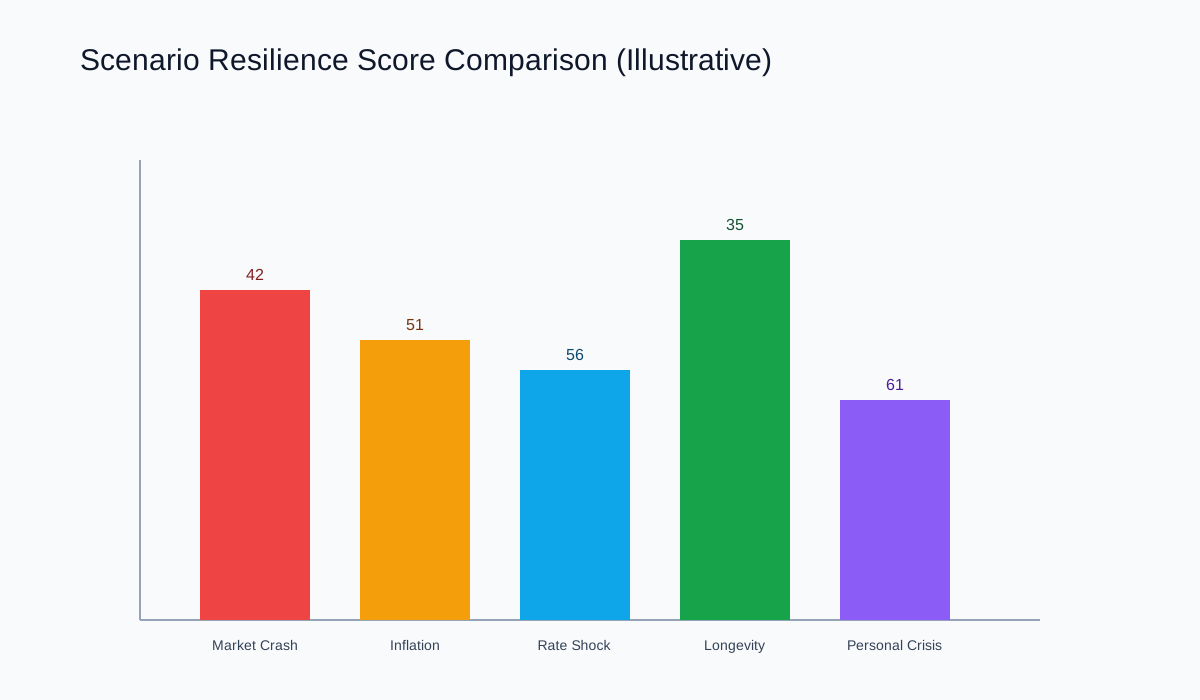
Stress outputs include survival probability, shortfall risk, worst-case outcome, resilience score, and recovery horizon where meaningful.
These values are translated into mitigation priorities: immediate, short-term, and long-term.
That translation is essential. Stress outputs that do not map to action queues create insight without execution.
What good advisory practice looks like
Good practice is not selecting the model with the highest central projection. It is selecting a plan that clients can stay with through volatility and adverse life events, with clear mitigation triggers documented in advance.
Stress testing therefore belongs in recommendation design, not as an afterthought. When advisers use scenarios to shape withdrawals, reserves, and risk posture up front, client outcomes are more robust and governance evidence is stronger.