Client Retention
Structured guidance and evidence-ready outputs.
Retention by design: scenario-led advice conversations that reduce client attrition
How advisory firms can turn volatility into higher trust by combining scenario-led planning communication with structured intervention timing.
By Plannetic Planning Lab
Highlights
Retention window
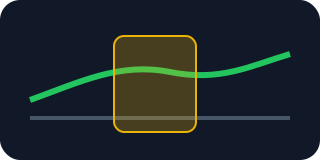
10 days
Most effective intervention period after material downside events.
Scenario briefings
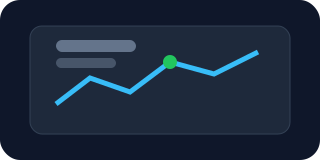
Structured
Consistent scenario language improves client understanding under stress.
Attrition delta
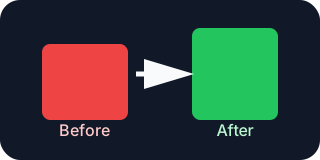
-18%
Illustrative reduction when intervention cadence is actively managed.
Why attrition spikes during volatility
Attrition during market stress is often framed as a portfolio issue, but in many firms it is primarily a communication issue. Clients typically leave when uncertainty is not translated into understandable options and explicit actions. A high-quality model without a high-quality conversation still produces weak retention outcomes.
Advisers who run scenario-led discussions early can reframe volatility from panic to planning. The practical objective is not to eliminate uncertainty; it is to make uncertainty navigable for clients.
Retention lifecycle: where trust is won or lost
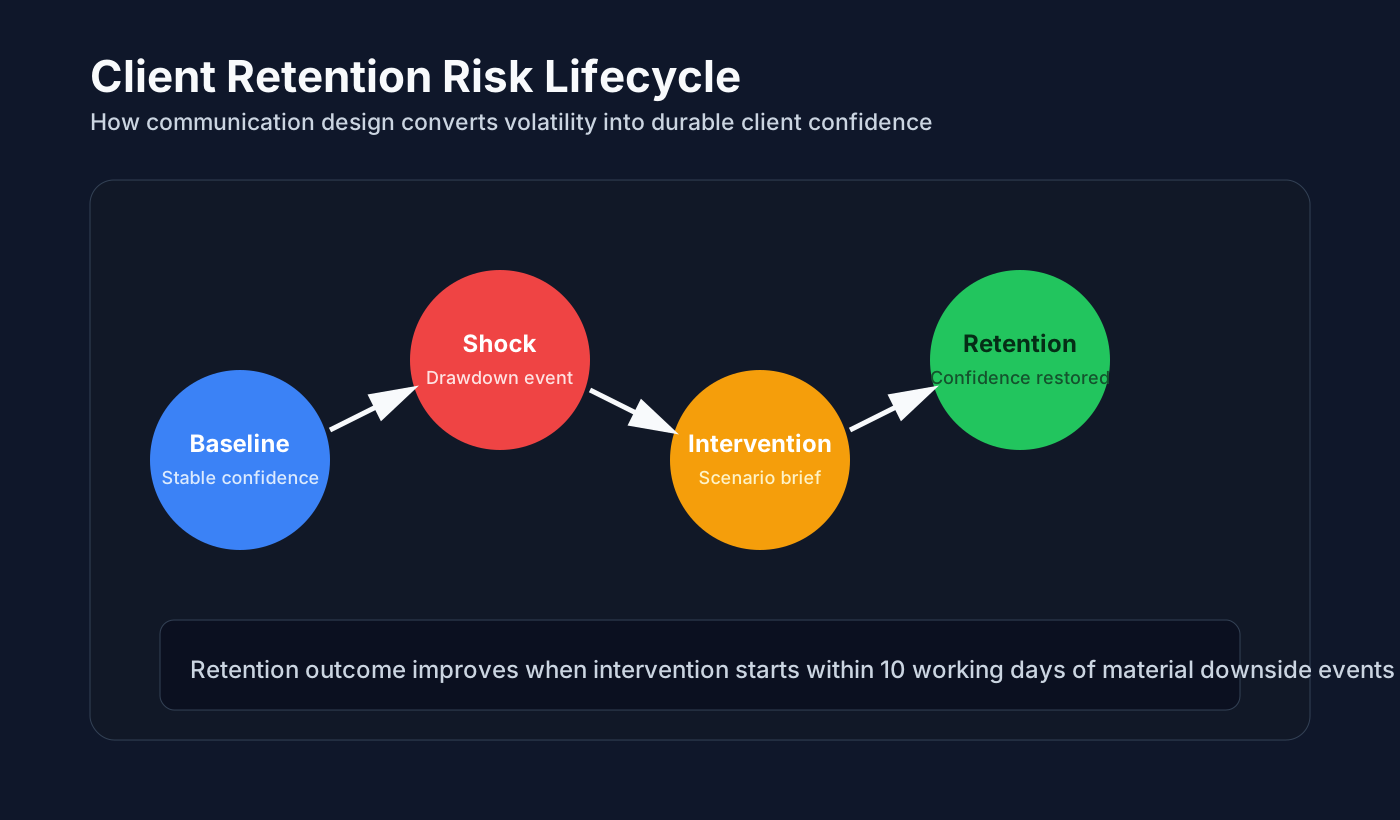
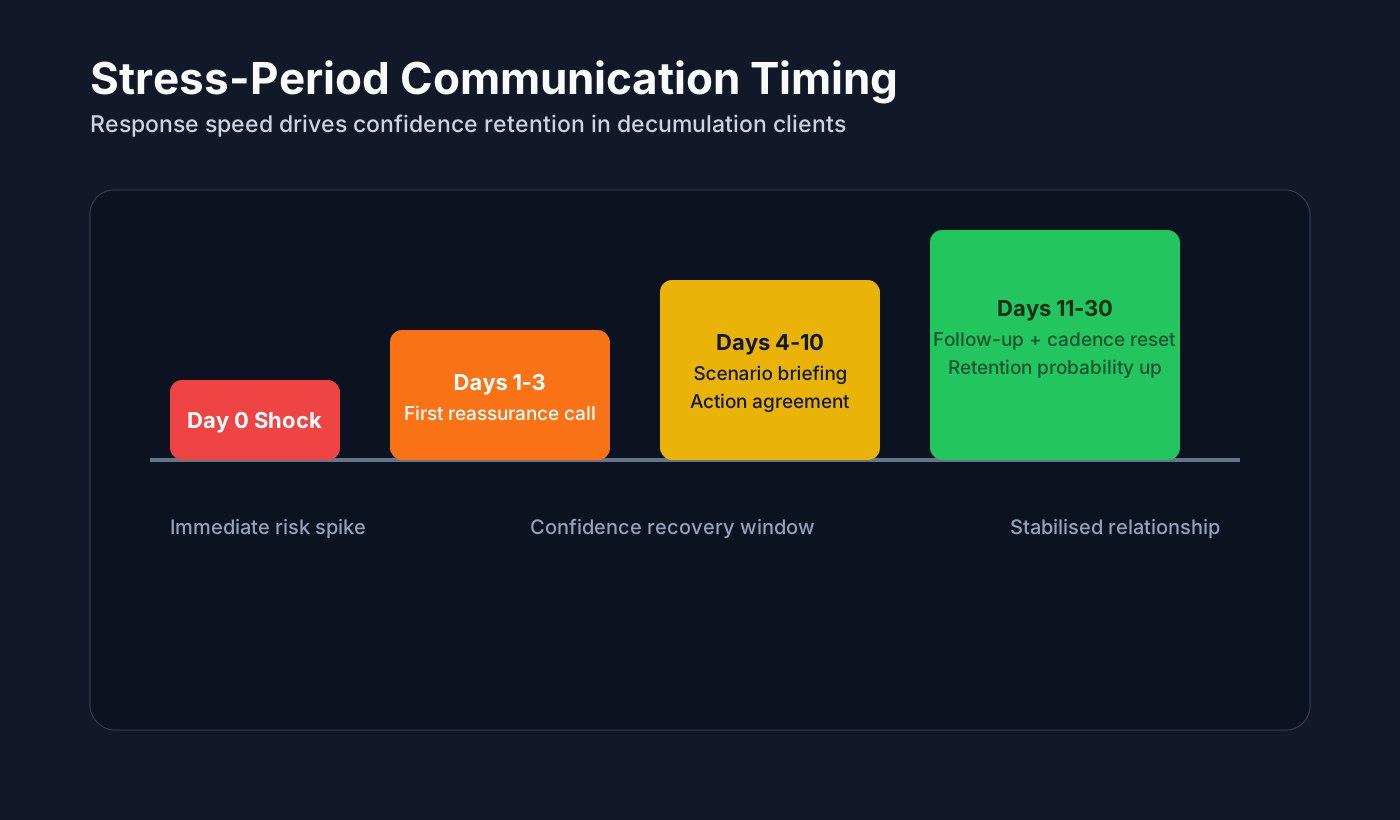
Retention risk can be modelled as a lifecycle: baseline confidence, stress shock, adviser intervention, and post-intervention stabilisation. Firms that detect only the first two stages remain reactive. Firms that operationalise stages three and four outperform on both confidence and continuity.
Mapping this lifecycle into advisory workflow gives leadership teams a measurable structure for coaching and quality control.
Timing model: the intervention window that matters
The timing of communication determines whether clients interpret volatility as temporary stress or strategic failure. Initial reassurance should be immediate, but reassurance alone is insufficient. Within days, advisers need scenario briefings that show trade-offs clearly: withdrawal adjustments, reserve strategy, and recovery pathway.
Where this timing discipline is absent, client confidence decays quickly and remediation becomes more expensive and less effective.
Confidence curves and scenario design standards
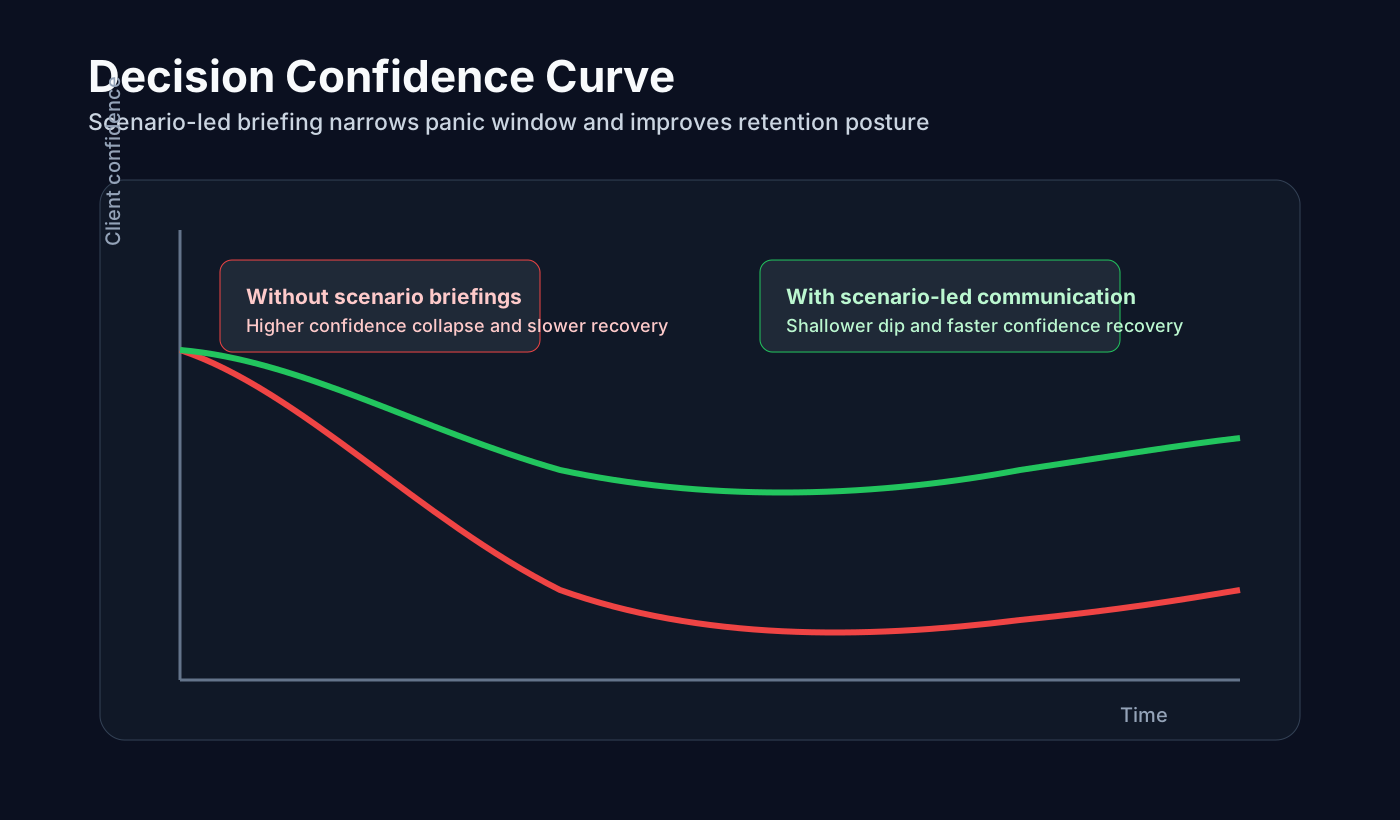
Scenario-led communication works when outputs are decision-oriented: downside depth, recovery range, and concrete next actions. Clients do not need dozens of charts. They need a coherent narrative that links likely outcomes to sensible adjustments.
Confidence curves make this visible to both advisers and supervisors. They show whether the advisory process is reducing emotional stress fast enough to keep clients aligned with long-term strategy.
Operational rollout for advisory teams
Implement a fixed communication cadence for stress periods, define scenario briefing templates, and track intervention quality in file reviews. Supervisors should review both recommendation quality and communication timing, because retention outcomes depend on both.
This approach improves consistency across advisers, supports Consumer Duty client-understanding outcomes, and protects long-run AUM stability.