Guardrails
Structured guidance and evidence-ready outputs.
Real-time suitability guardrails: why post-sale file checking is too late
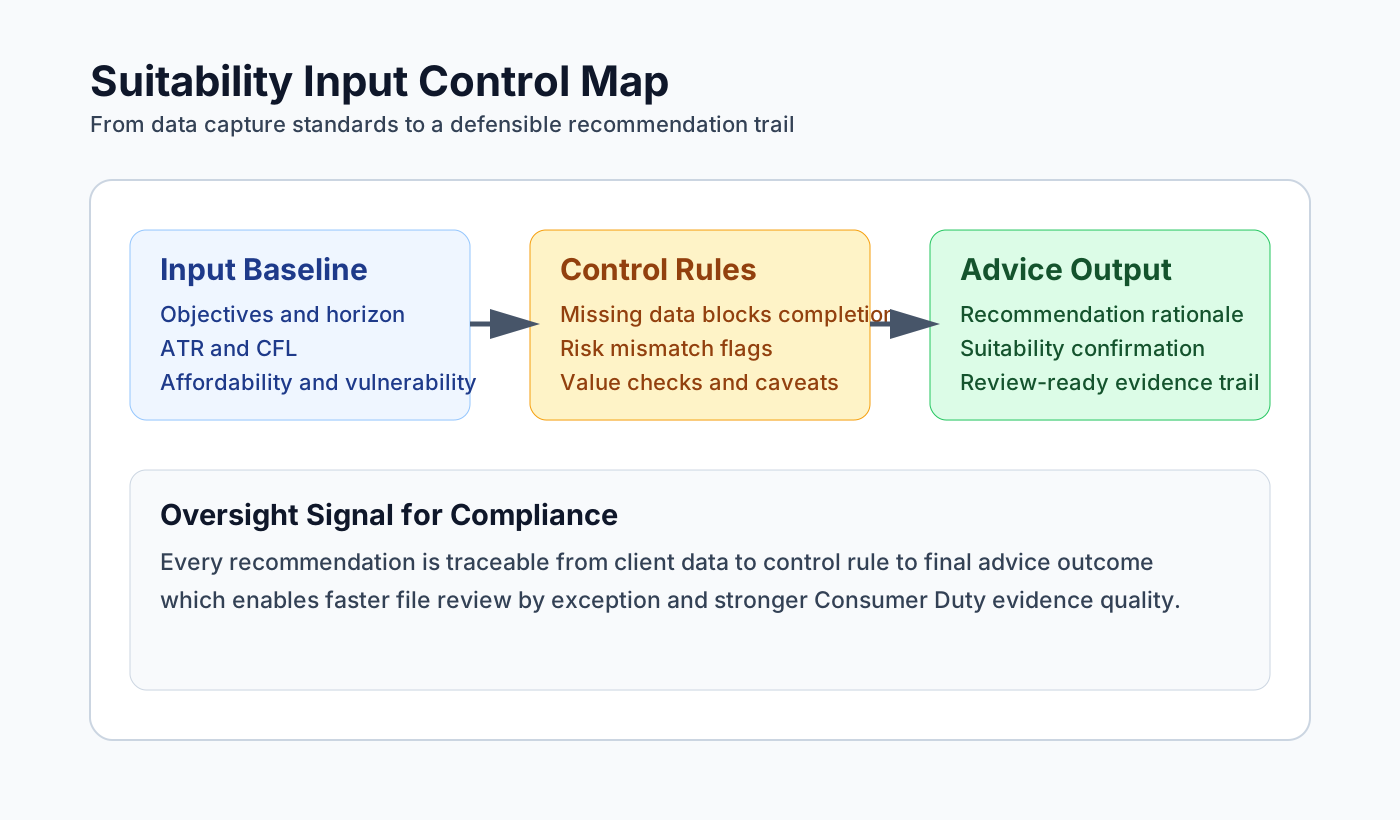
Retrospective file review is detection, not prevention. The stronger control model is to stop suitability defects while the advice is still being built.
By Plannetic Research
Highlights
Defect timing
Too late
A defect found after advice has been given is a control failure, not a success.
Guardrail logic
Point-of-entry
Input gaps, CFL conflicts and unsupported recommendations should trigger before completion.
Review burden
Reduced
Compliance should review by exception, not reconstruct preventable reasoning after the fact.
Why retrospective QA is the wrong control layer
Most firms still rely on file review as the main protection against unsuitable advice. That feels intuitive because it creates an explicit quality checkpoint. The problem is timing. By the time a checker finds a defect, the adviser has already given the recommendation, the client has already formed an impression of the advice, and the firm has already taken on liability for the outcome.
In that model, the control operates after the event it is supposed to protect. It can identify themes, support coaching and occasionally catch a case before implementation, but it cannot prevent most defects at source. That means a strong-looking QA process can coexist with a weak prevention model.
The FCA's findings on suitability process weakness reinforce this point. Where information is incomplete, capacity for loss is poorly evidenced, or the recommendation rationale is generic, retrospective QA can describe the failure but not undo the operational conditions that allowed it. The higher standard is to stop the workflow from progressing when the minimum evidence standard has not been met.
What real-time guardrails should actually test
Real-time suitability controls should focus on the handful of conditions that create disproportionate review risk. First: missing or contradictory client facts. Second: unseparated attitude-to-risk and capacity-for-loss logic. Third: affordability or income sustainability assumptions that do not align with the recommendation. Fourth: unsupported price-and-value or ongoing-service claims. Fifth: incomplete vulnerability or knowledge-and-experience evidence where the recommendation complexity demands it.
These are not abstract control ideas. They are the failure points that create real file-review findings and, in more serious cases, consumer harm. A good guardrail does not try to replicate the entire judgement of a competent adviser. It checks whether the judgement rests on enough coherent evidence to be defensible.
This distinction matters because poorly designed controls can become obstructive. The aim is not to automate advice. It is to prevent avoidable defects while leaving the adviser free to apply professional judgement within a structured evidence boundary.
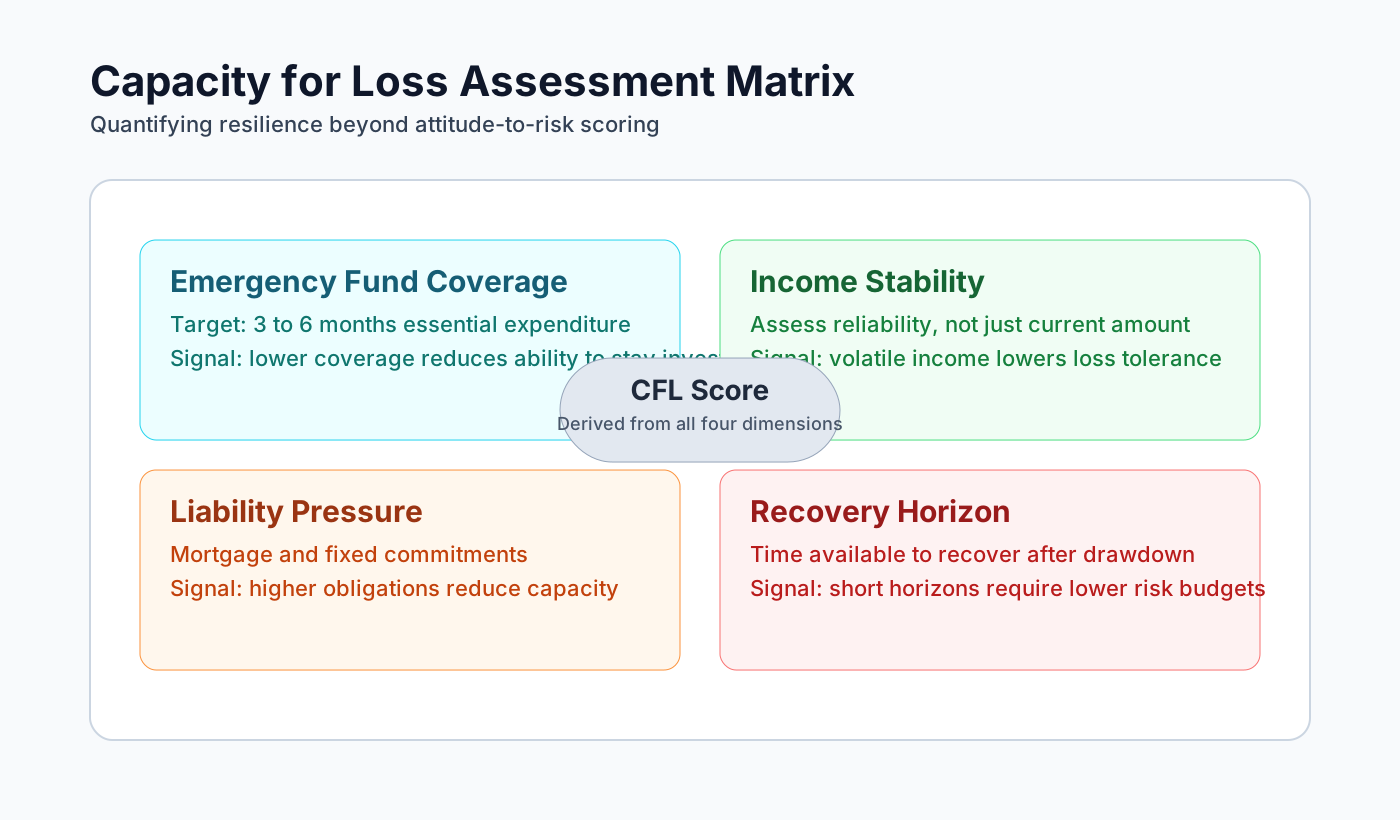
How the operating model changes when controls move upstream
When guardrails operate in workflow, compliance no longer spends most of its time reconstructing why something went wrong. Instead, it reviews true exceptions: cases where an adviser made a justified departure, where supervisory override was required, or where a complex client situation demanded more bespoke handling than the baseline rule could support.
This has two benefits. First, it improves quality because the most common defects are prevented rather than merely counted. Second, it changes the economics of QA. Reviewer capacity can be directed towards pattern analysis, coaching and genuinely complex cases instead of routine preventable failures. That is the point where control becomes scalable instead of merely burdensome.
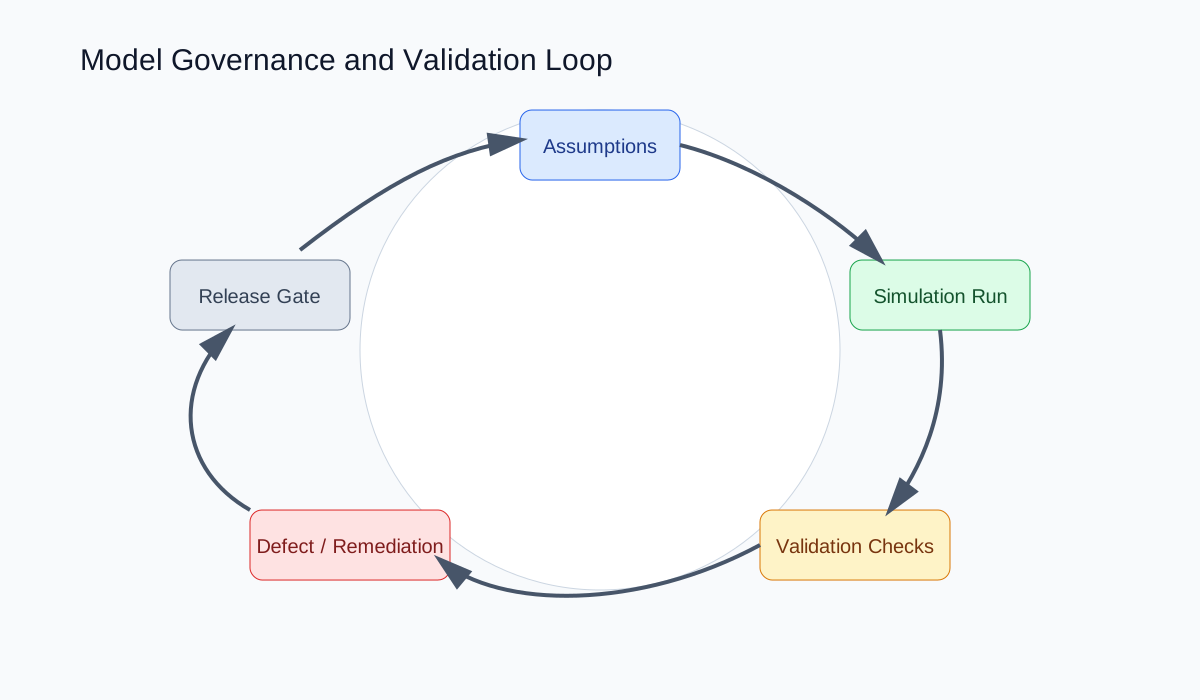
How Plannetic should position guardrails
Plannetic should frame suitability guardrails as an upgrade to the advice operating model, not a replacement for human judgement. The platform can standardise evidence capture, test key compatibility rules, and route genuinely complex or borderline cases for supervisor review. That gives firms a cleaner answer to the question every checker is really asking: did the recommendation become more robust because the workflow itself prevented avoidable defects?
The commercial implication is important. Firms that prevent rather than simply review are easier to scale, easier to supervise and easier to defend when file quality is challenged. In that sense, guardrails are not just a compliance feature. They are a production-quality feature for advice.