Consumer Duty
Structured guidance and evidence-ready outputs.
Consumer Duty monitoring that holds up to scrutiny
A practical framework for evidence-based monitoring that links client outcomes to governance, MI, and remediation workflows.
By Plannetic Research
Highlights
Duty outcomes
4 outcomes
Products & services, price & value, understanding, support.
Monitoring layers
3 layers
Governance, MI, remediation workflow.
Portfolio letters
Sector-led
Consumer investments, asset management and more.
Regulatory Expectations Under Consumer Duty
Consumer Duty raises the bar on evidencing outcomes. The FCA expects firms to show how governance, monitoring and remediation demonstrate good outcomes across products and services, not just at point of sale. Monitoring is now a supervisory evidence requirement, not a reporting preference.
Portfolio letters and Dear CEO communications highlight specific expectations for sectors such as consumer investments, reinforcing that firms must embed monitoring and act on poor outcomes.
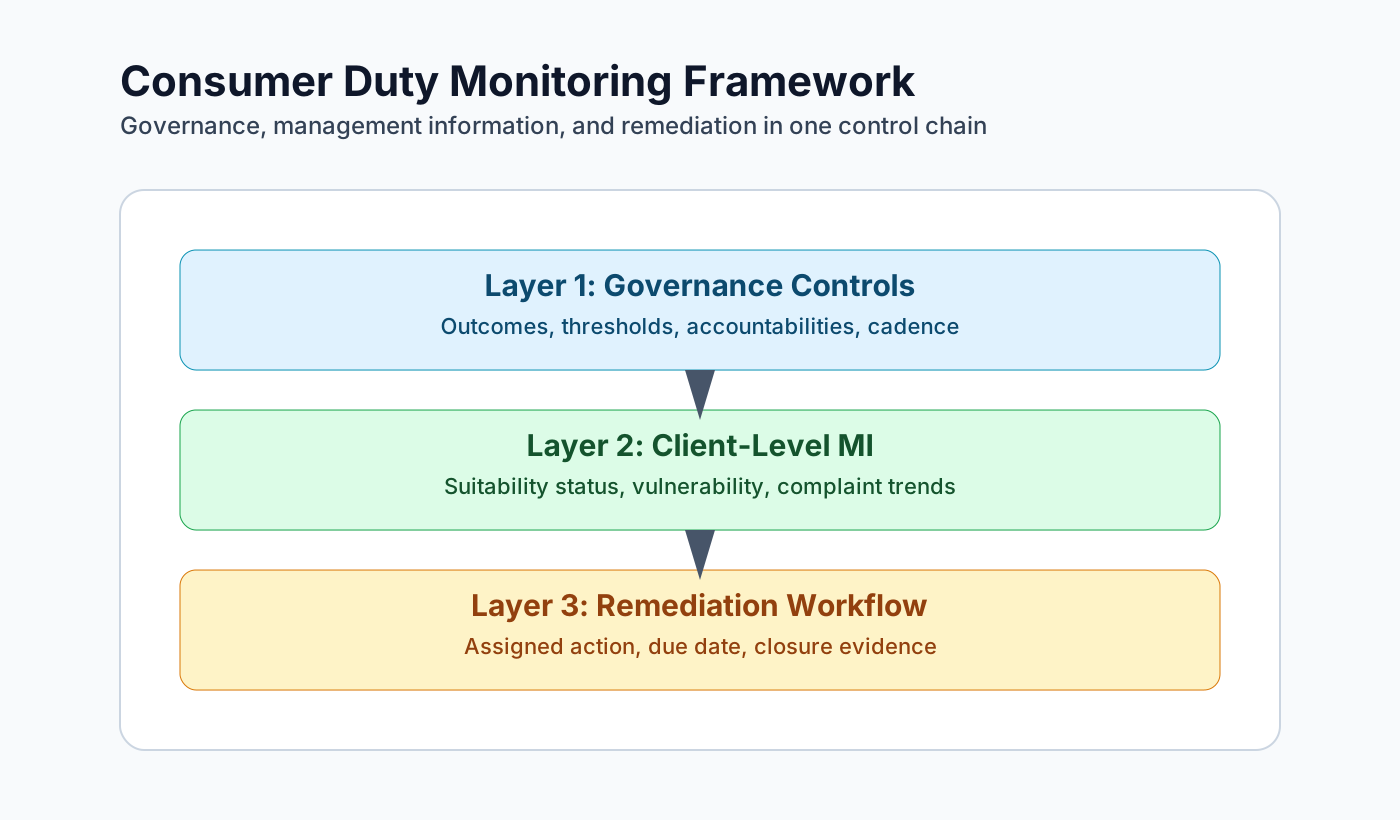
Monitoring Design: Governance, MI, and Remediation
Start with governance: define measurable outcomes, appoint accountable owners, and set review cadence.
Layer in client-level MI such as suitability status, review completion, vulnerability indicators and complaint trends, mapped to the four Consumer Duty outcomes.
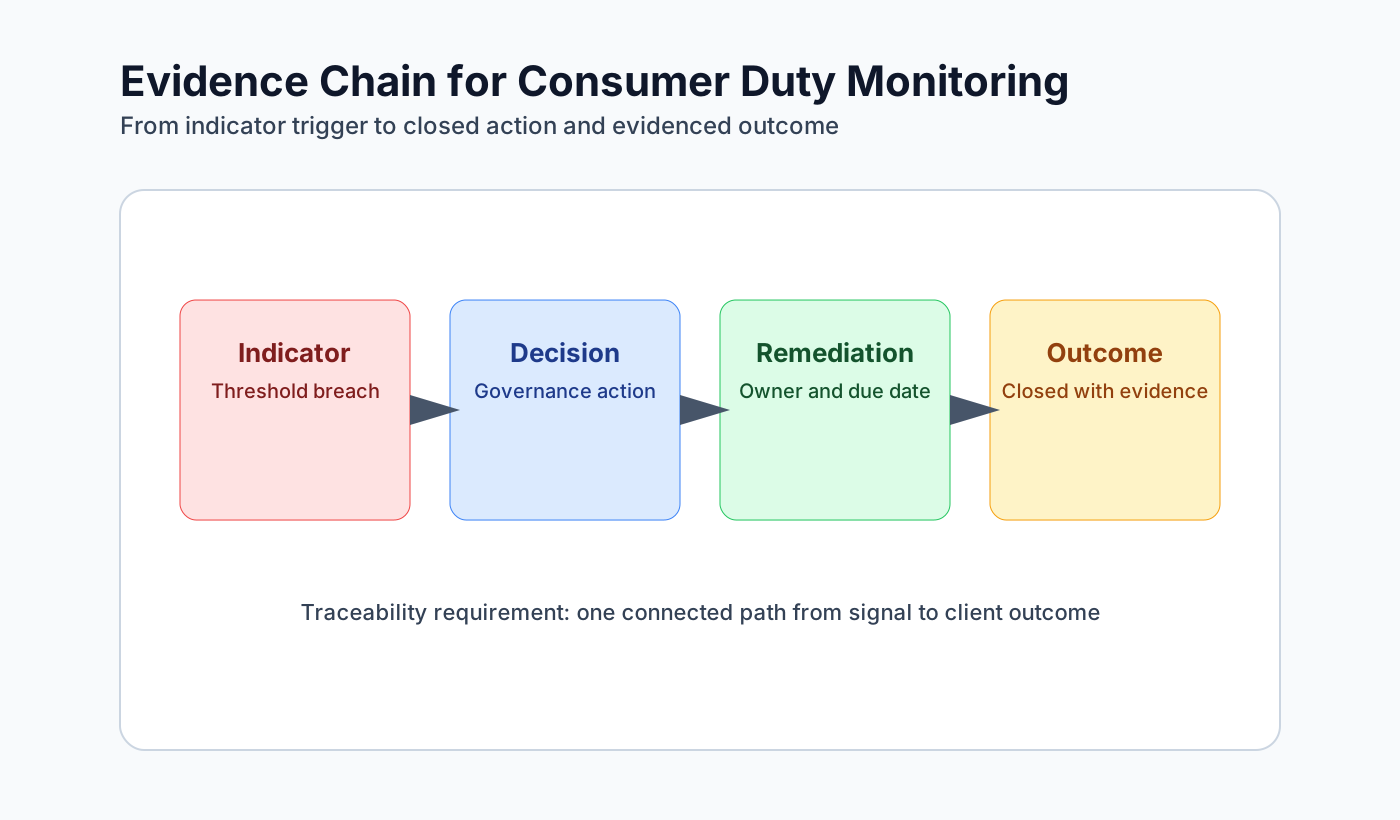
Finally, connect remediation directly to workflow tasks so every decision is recorded, assigned and time-bound. If remediation is not tracked to closure, monitoring has failed its purpose.
Evidence Quality: What Supervisors Expect to See
Evidence is more than a dashboard. It should show the reason for monitoring thresholds, the data sources used, the decisions made and the follow-up actions taken.
A single audit trail that links governance minutes, MI snapshots and client outcomes is the standard firms are moving toward. The core test is traceability from indicator to decision to outcome.
Operationalising the Framework in Plannetic
Plannetic connects assessments, cash flow projections and review workflows in one timeline. Outcome monitoring is visible at both firm and client level, with remediation actions tracked end-to-end.
The result is audit-ready evidence without manual chasing or fragmented reporting.