Cashflow Engineering
Structured guidance and evidence-ready outputs.
Cashflow engine design and suitability evidence: how Plannetic sequences planning maths
An implementation-level breakdown of Plannetic cashflow sequencing, with a worked case study showing how ordering logic changes suitability outcomes.
By Plannetic Planning Lab
Highlights
Yearly logic
5-step
Consistent sequence from contributions to surplus reinvestment.
Shortfall policy
3-stage
Cash first, investments second, pension third.
Adviser signal
Sustainability
Income-expense ratio and shortfall years drive action.
Cashflow Modelling: Process Control, Not Charting
A projection can look polished and still be wrong if the annual order is inconsistent. Many suitability problems come from silent arithmetic ordering errors rather than missing data.
In Plannetic, yearly sequencing is explicit and repeatable. That gives advisers and reviewers a clear audit trail from assumptions to each yearly output.
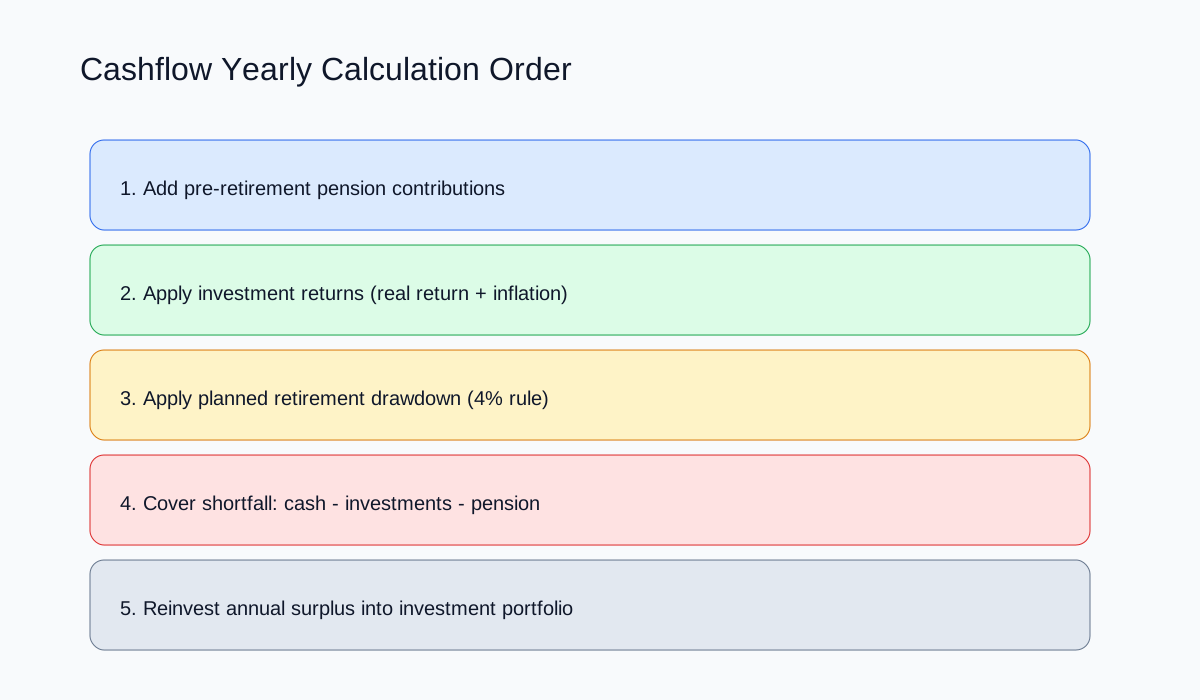
The yearly sequence we use
For each year, the engine applies contributions, then returns, then planned drawdown, then deficit coverage, then surplus reinvestment.
This mirrors adviser logic: save, grow, spend, recover deficits, and reinvest surplus.
Because the sequence is fixed, scenario comparisons are meaningful instead of being artefacts of hidden formula order.
Income and expense modelling choices
Income includes pre-retirement employment, state pension from state pension age, and other configured streams.
Expenses use detailed categories where available, or a structured fallback split when detail is missing.
Inflation is applied year-by-year. Each output component maps to a clear input and transformation step.
Retirement drawdown and shortfall handling
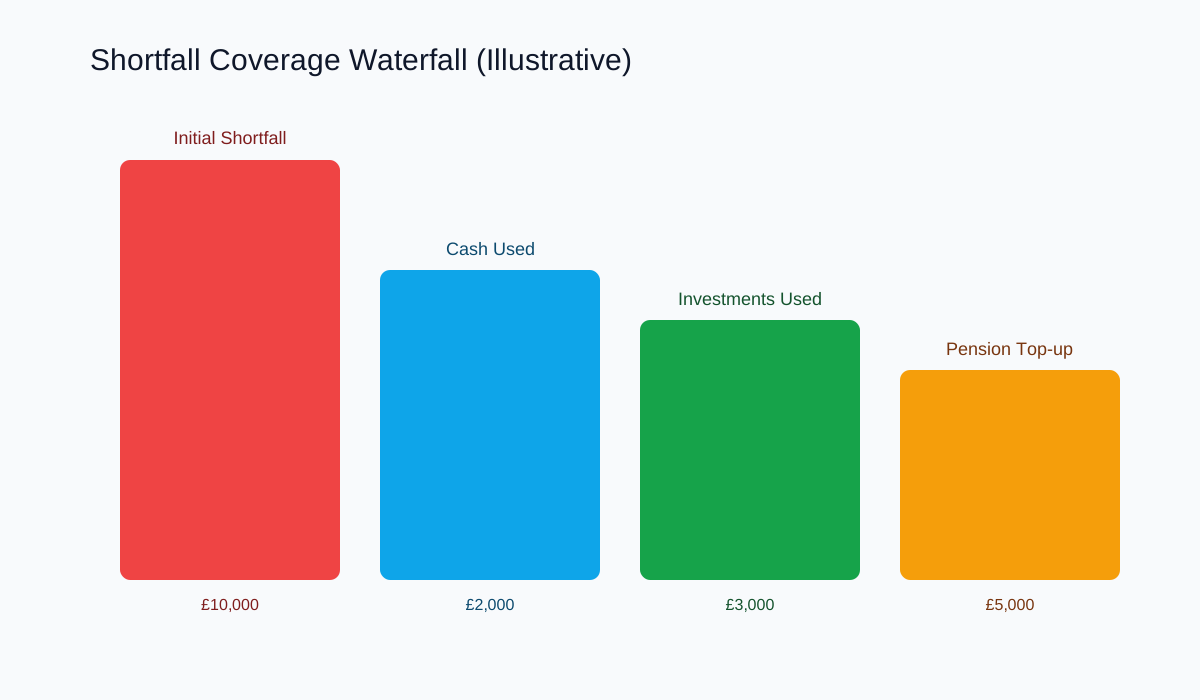
At retirement, planned drawdown begins under explicit rules. If income still falls short, deficits are covered in strict order: cash, investments, then pension top-up if needed.
This liquidity-first approach is intentionally conservative. It surfaces depletion risk earlier when spending pressure is too high.
Outputs include annual surplus or deficit, total assets, and real-terms value so advisers can separate nominal growth from purchasing-power outcomes.

Case Study: Sequence Pressure Exposes a “Safe” Plan
In one anonymised case, a client plan appeared robust because total projected assets remained positive at horizon. However, once yearly ordering was enforced with inflation-adjusted spending and liquidity-first shortfall coverage, multiple deficit years emerged in the first decade.
The adviser tested alternatives inside the same model: delaying retirement by one year, reducing drawdown in the first three retirement years, and ring-fencing additional cash. Each change was small in isolation but materially improved shortfall-year frequency when combined.
That changed the recommendation narrative from "you should be fine" to a documented pathway with explicit trigger points. This is exactly where good cashflow modelling adds value: it turns vague comfort into actionable planning decisions.
Sustainability signals advisers can act on
Sustainability is not just end-value. It is path quality. We expose ratio signals and shortfall-year indicators so advisers can identify whether projected plans require intervention before clients encounter avoidable strain.
Useful interventions are explicit: adjust retirement age, revise withdrawal assumptions, rebalance risk posture, or address expenditure profile. The model is valuable when it supports these practical levers.
By designing outputs for decisions rather than presentation, we reduce report theatre and improve action quality.
Operational takeaway for firms
A robust cashflow engine provides repeatable reasoning that can be defended in file review. That is especially important as firms move to higher evidence expectations under Consumer Duty and suitability scrutiny.
Plannetic cashflow outputs are therefore structured to be reviewed by advisers, challenged by compliance, and understood by clients.